“Geopolitics of the Body” >>

Geopolitics of the Body

“What kind of territory is flesh?” 
– Deborah Dixon   

The domination and sexualization of the female body as a metaphor for territorial conquest and colonial exploitation has been around for centuries, but how are geography and politics entangled with the feminine today?  

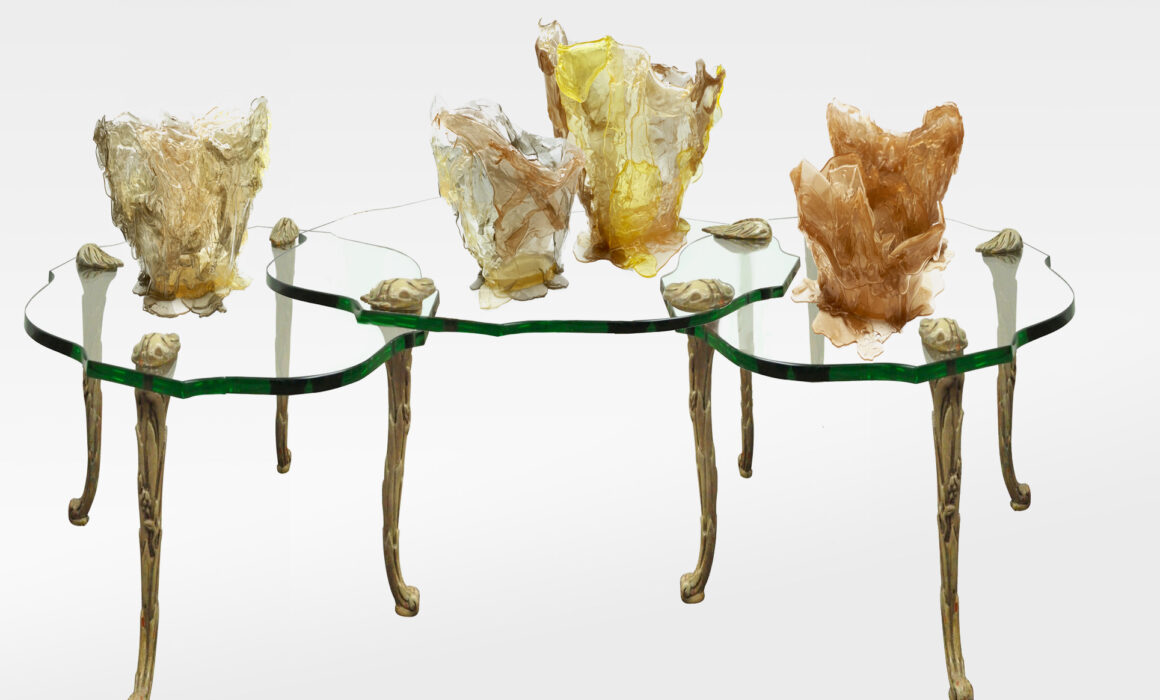
The work comprises a series of sculptural objects exploring geopolitics and feminism. A series of sculptural vases made out of a ‘rubbery’ soft epoxy resin -resembling different skin tones and shaped as a female matrix- are placed over an irregularly shaped platform that plays with cartographic contours and the recreation of a domestic coffee table. 

Materiality becomes an actor and agent within this series, suggests intersections and divergences, confronts nature, so called “man-made” processes, and cultural conventions. It embodies physical and emotional triggers. Its multiple folds both exhibit and conceal a history of vulnerability and violence, frontiers, and solitude. 

“La frontera salvaje (The Salvage Frontier)” >>

La frontera salvaje (The Savage Frontier)

“On the other side of the frontier exists the void, namely space to be conquered or civilized.” 
– Walter Mignolo

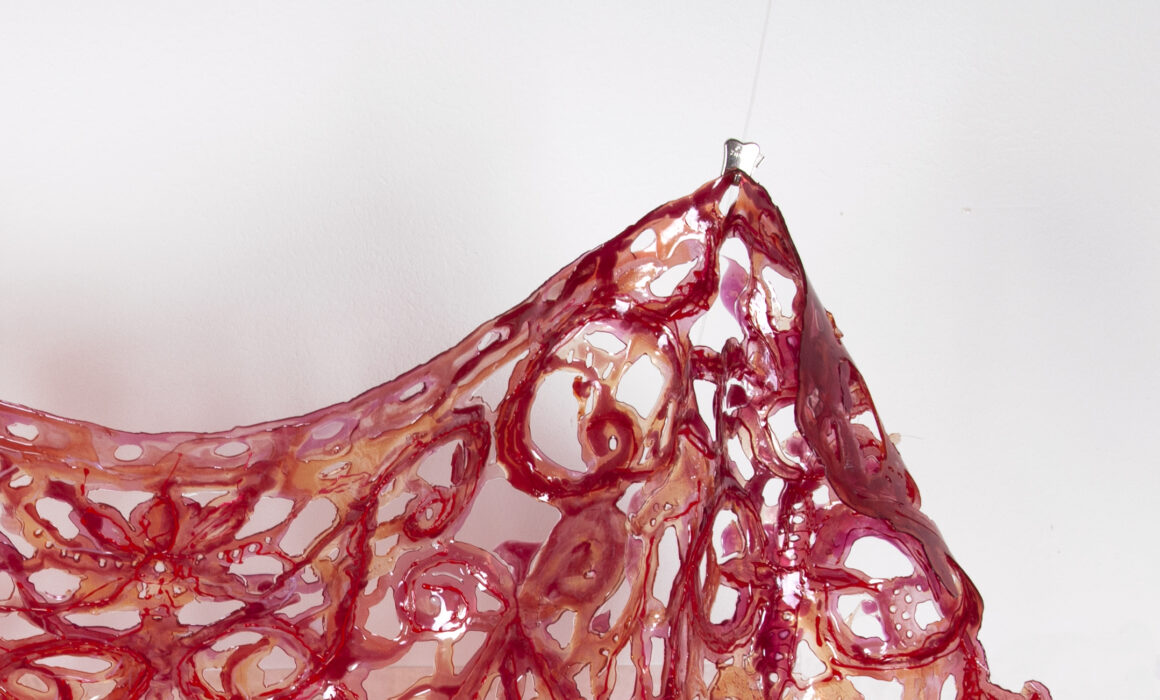
A pointy oversize piece recalling handmade lace is hanging like a carcass. Its materiality suggests a fleshy quality, a shift from the delicacy of the aforementioned textile.

This element evokes the role of livestock farming in Argentinean economy and culture, but also the physical and symbolic violence perpetrated by the so-called civilizer. The title refers to a motto of the late decades of the 19th century, «Civilization or Barbarism”, when several military raids against the indigenous people progressively extended the borders of the territories controlled by the State.

The work confronts the viewer with a questioning perspective on how ‘savagery’ and ‘civilization’ were entangled within the frontier.


“Forms of Taste” >>

Forms of taste

“The value system is thus entirely self-regulating and functional, with a built-in tendency to eliminate turbulence and fluctuation. Crisis, doubt, and experiment are features of the baroque. Certainty is classical.” 
– Omar Calabrese, Neo-baroque. A Sign of the Times

If we imagine certainty as the enemy of change, fluidity becomes a sign of our times, a signal of openness to replacing old binary structures with more inclusive representations and perspectives. Crisis, doubt, and experiment are essential features underpinning new ways of being. The baroque, as theorized by Calabrese, appears in my twisted forms and their resistance to represent fixed categories of interpretation. The neo-baroque’s permeability, its openness to vernacular elements makes it a significant form—from the entrails of Europe’s cultural machinery of seduction—for re-imagining integration over diversity.  [Read full text]


“AestheSis” >>

AestheSis

Rules of taste enforce structures of power.” 
– Susan Sontag

Reappropriating the Greek word meaning “sensation or perception” decolonial authors such as Walter Mignolo, Rolando Vázquez, and Adolfo Albán Achinte push against aesthetics, considering it a constituent part of colonial matrix of power. Their theories encourage an ongoing process of challenging and subverting the hegemony of modern/colonial aesthetics aiming a ‘decolonization of the senses’. 

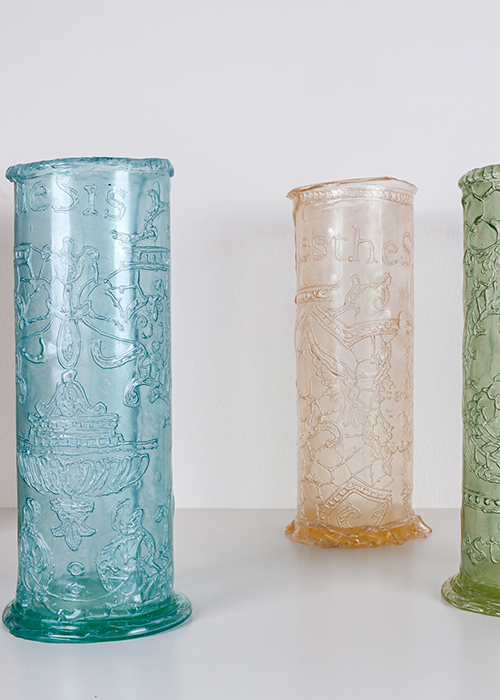
These sculptures are inspired by engraved glass objects from classical antiquity, replicating the basic shapes of beakers and some of their common hues. Through a shift in materiality that leads to a flexible finish, the rubbery resin invites a rediscovery of touch, enhancing the subjective aspect of perception, an elementary awareness of stimulation. [Read full text]


“Otros muros posibles”

Otros muros posibles

Contrastando con los discursos divisorios que apelan a la segregación y al odio entre las comunidades, la estructura blanda de la red actúa como un gesto político fortaleciendo el tejido social, el diálogo y la integración.


“Cultural Wounds” >>

Cultural Wounds

Decoloniality is at once the unveiling of the wound and the possibility of healing. It makes the wound visible, tangible; it voices the scream. 
Walter Mignolo / Rolando Vázquez 

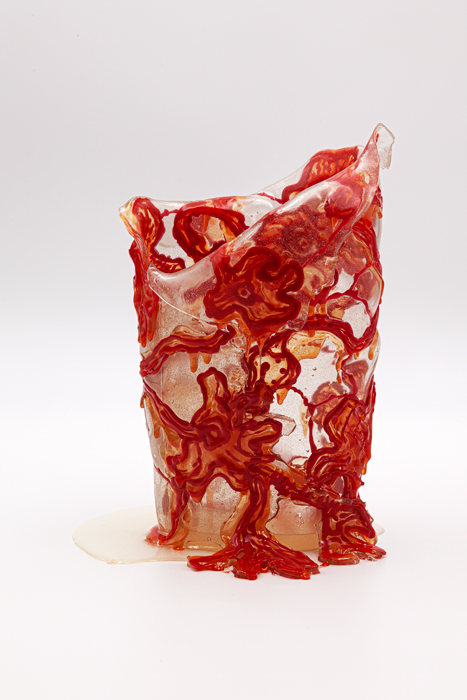
Cultural Wounds refer to the trauma inflicted in society by centuries of physical and symbolic violence. They are caused by the narratives fabricated to legitimize colonial power, which involved categorizations among races and genders, and the brutal suppression of systems of belief that differ from European canons.  

In this context, the works from the series respond to the concept of the politicization of the body, the individual marked by marginalization, subalternity, and invisibilization. The decorative patterns are inspired by handmade lace from the Renaissance period, a fashion accoutrement related to status and refinement, and in vogue concurrently with brutal colonial expansion of European empires.  [Read full text]


“Other Possible Walls” >>

Other possible walls

Resistance is not exclusively about denying the oppressor’s power but also on creating new ways of existing, including ways of feeling, thinking and being in a world that progressively constructs itself through varied insurgencies and irruptions.” 
– Nelson Maldonado-Torres

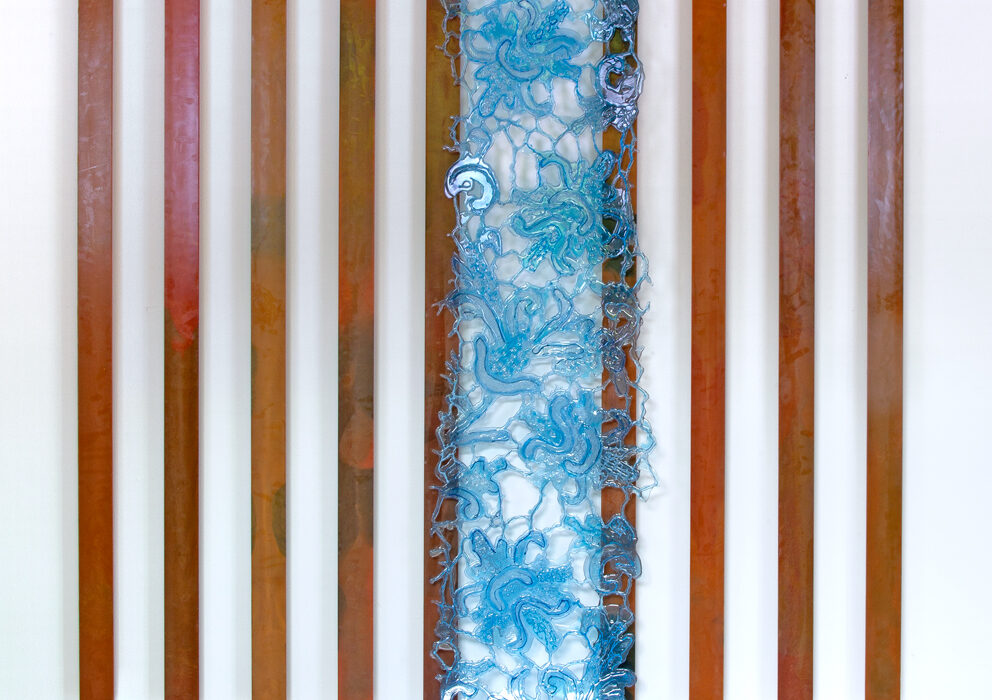
Expressing my concern for estrangement, uprooting, and cultural transition, the wall sculpture Other Possible Walls addresses the immigration conflict and current political turmoil in the US. It stages a section of the country’s southern border disrupted by a strip of a delicate lace-like net that cascades through the floor suggesting expansion and regeneration. 

I address the idea of resistance as an interwoven pattern conveying interconnectedness and interdependency. In contrast with divisive narratives that call for segregation and hate within communities, the soft structure of the web acts as a political gesture strengthening the social fabric, dialogue, and integration.   [Read full text]


“Heridas culturales” >>

Heridas culturales

Históricamente presentes y todavía abiertas en la experiencia diaria, las heridas llaman a reaccionar fluyendo colectivamente.
La posibilidad de sanar, un tiempo para el surgimiento de nuevas formas.


“Oblivion” (serie)

Oblivion

La memoria es una paradoja que involucra olvidar y recordar. El encaje parece emular su dialéctica: revelando y escondiendo percepciones, recuerdos y narrativas que convocan a cuestionar legado e identidad.


“Oblivion” >>

Oblivion

We might understand memory as a paradox that involves both remembering and forgetting. Oblivion addresses this ambiguity in relation to the self-construction of identity and nostalgia, through the evocative power of the ornamental. 

The free-hanging works from this series take the form of oversized fragments of handmade lace pieces displaying diverse iconography from the Renaissance period: flowers, acanthus leaves, and volutes. In my memory, these figures are also reminiscent of Buenos Aires’ architectural façade reliefs, traces of a past era that I have not experienced and, yet, for which I yearn. 

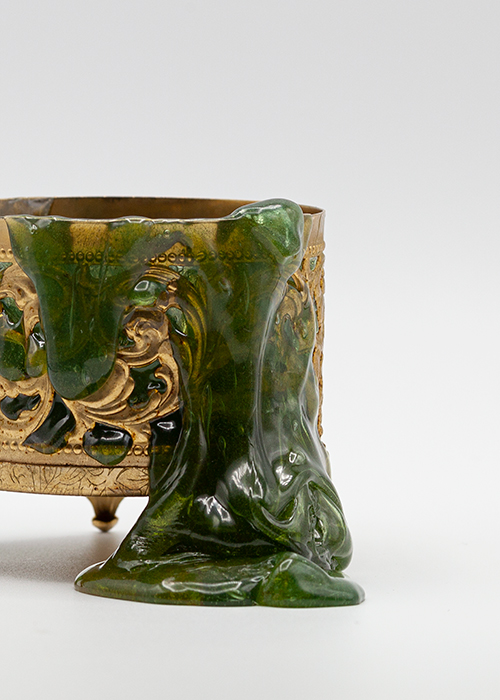
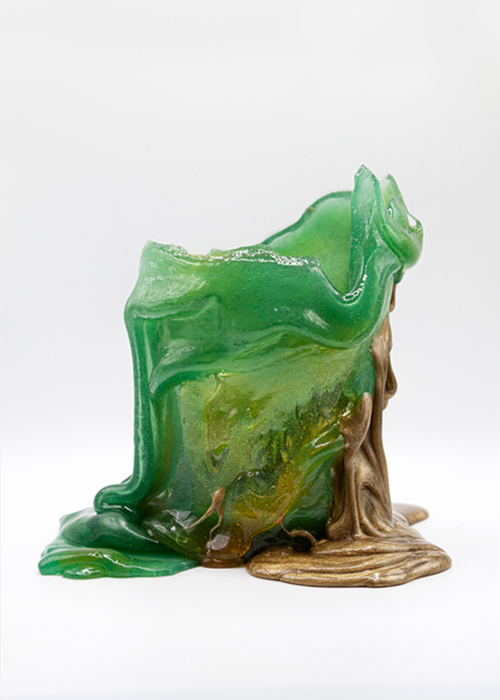
Are There Shapes in Oblivion? loosely resemble ormolu-mounted vases -a term used to describe gilt brass ornaments applied to objects in the 18th and 19th centuries- in different stages of metamorphosis. Having lost their recognizable shape and becoming one with the vase, they are frozen in time amid an uncertain transition. [Read full text]


Privacy Settings
We use cookies to enhance your experience while using our website. If you are using our Services via a browser you can restrict, block or remove cookies through your web browser settings. We also use content and scripts from third parties that may use tracking technologies. You can selectively provide your consent below to allow such third party embeds. For complete information about the cookies we use, data we collect and how we process them, please check our Privacy Policy
Youtube
Consent to display content from - Youtube
Vimeo
Consent to display content from - Vimeo
Google Maps
Consent to display content from - Google